
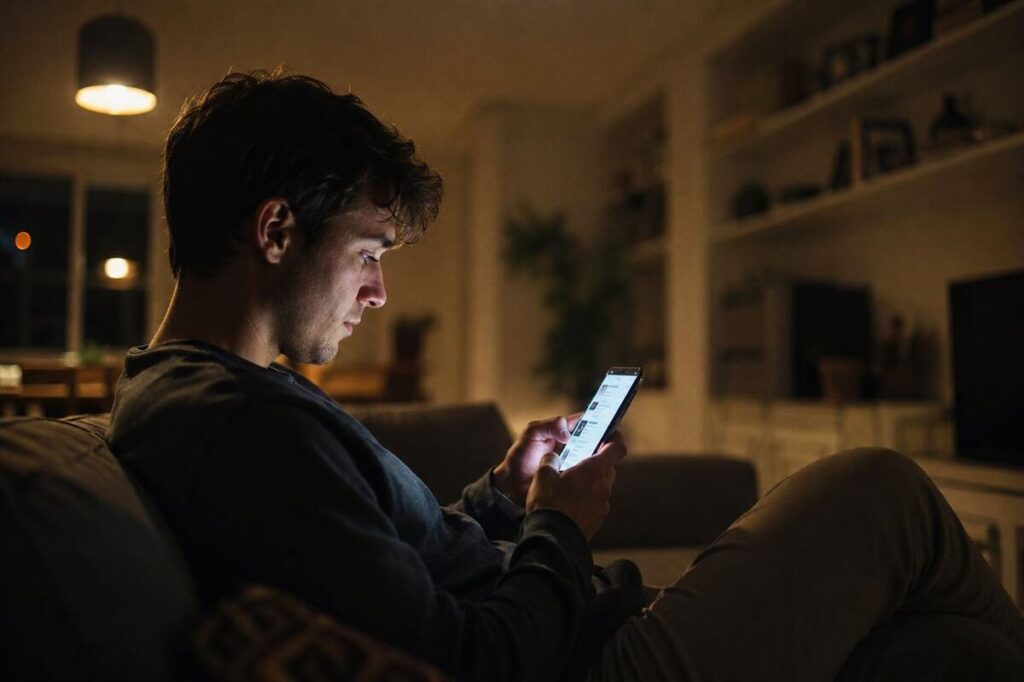
Do you scroll through dozens of posts, react to them in your head, and still close the app without liking or commenting on anything? That’s one of the most common social media silent scroller traits, and it’s far more widespread than most people realize.
Most social media users don’t post or comment regularly. They watch. Recent data on TikTok posting habits shows that nearly half of adult users have never posted a single video, and the pattern holds across Instagram and Facebook too, where most people consume content passively without ever leaving a visible trace.”
What Is a Silent Scroller on Social Media?
A silent scroller is someone who consumes content regularly but rarely engages with it publicly. No likes, no comments, no shares, no posts of their own.
This is different from being inactive. Silent scrollers check their feeds often, watch Stories daily, and read through updates consistently. The only thing missing is a visible footprint.
This shows up across every major platform:
- Instagram: watching Stories without replying
- TikTok: scrolling through the For You page without liking
- Facebook: reading updates without commenting
- Twitter/X: following conversations without posting
- YouTube: watching videos without ever liking or commenting
Even on platforms where the definition of social media itself gets debated, like YouTube, this same passive-viewing pattern shows up.
Common Social Media Silent Scroller Traits to Know
Here are the traits that show up most often among silent scrollers:
- You stay informed without saying much. You know what’s going on in people’s lives, but rarely bring it up first.
- You rarely use the like button. Even content you genuinely enjoy often goes unacknowledged.
- You screenshot instead of sharing. Saving something privately feels safer than reposting it.
- You avoid being seen viewing Stories. You may wait before watching, or use settings that keep your view anonymous.
- You post little or nothing yourself. Your profile might be mostly blank, private, or outdated.
- You feel like you’re observing rather than participating. Scrolling feels closer to watching a conversation than joining one.
You don’t need to match every trait. If two or three sound familiar, silent scrolling is likely a bigger part of how you use social media than you realized.
Why Some People Prefer Watching Over Posting Online
Silent scrolling is usually a deliberate habit, even if it isn’t a conscious decision. A few reasons explain why it’s so common:
Privacy. Many people don’t want their opinions, photos, or reactions tied to a profile that coworkers, family, or strangers can see.
Fear of judgment. Posting invites feedback, and not all of it is positive. Staying silent removes that risk.
Content overload. Reacting to everything in a busy feed is exhausting. Watching without responding is easier to sustain.
A natural preference for observing. Some people are simply more comfortable absorbing information than producing it, both online and offline.
These reasons often overlap. For most silent scrollers, watching quietly isn’t a problem to fix. It’s just a more comfortable way to stay connected.
Silent Scroller vs. Lurker: What’s the Real Difference?
These terms are often used interchangeably, but they aren’t identical.
A lurker usually refers to someone in a specific space, such as a forum, group chat, or online community, who reads without posting. The term comes from early internet culture, especially forums and Reddit-style platforms.
A silent scroller applies more broadly to everyday social media use across an entire platform, like Instagram or TikTok, rather than one specific group or thread.
| Silent Scroller | Lurker | |
| Where it happens | General social feeds | Specific groups or forums |
| Main behavior | Passive scrolling | Passive reading |
| Common platforms | Instagram, TikTok, Facebook | Reddit, forums, Discord |
Every lurker could be considered a silent scroller in a broad sense, but not every silent scroller fits the traditional definition of a lurker.
The Psychology Behind Passive Social Media Behavior
There’s real psychology behind why people choose to watch rather than participate.
Research on social media use links passive scrolling to lower social pressure and less anxiety around self-presentation. Posting requires curating an image. Scrolling doesn’t. That difference alone explains a lot of the appeal.
Passive use also connects to social comparison. By observing without contributing, silent scrollers may be protecting themselves from being compared to others, and from inviting comparison in return.
None of this makes silent scrolling unhealthy on its own. For many people, it’s simply a lower-pressure way to stay socially connected.
Signs You Scroll More Than You Interact
Still not sure where you fall? Check how many of these apply to you:
- You spend more time on social media than you’d guess if asked
- Your following count is much higher than your post count
- You rarely comment, even on close friends’ posts
- You’ve watched an entire Story without the poster knowing
- You feel caught up on someone’s life without ever speaking to them directly
If most of these sound familiar, scrolling has likely become your main way of engaging with social platforms, even if you don’t think of yourself as an active user.
Is Silent Scrolling Linked to Introversion or Anxiety?
Not always, though there’s some overlap.
Introversion can play a role. People who prefer observing over initiating conversation often carry that same preference into how they use social media.
Social anxiety can contribute too, particularly fear of posting the wrong thing or being judged for a comment. Staying silent removes that risk entirely.
That said, plenty of confident, extroverted people are silent scrollers as well, often because they value privacy or simply don’t feel the need to react publicly. The habit is common enough that it can’t be tied to one personality type.
How Silent Scrollers Consume Content Differently
Silent scrollers don’t just avoid visible interaction. They often consume content in a different way altogether.
- They take longer to react, if they react at all. There’s no urgency to like or comment first.
- They save content instead of sharing it. Bookmarking privately is far more common than reposting.
- They gravitate toward video. Passive formats like Reels and TikTok fit naturally into a watch-only habit.
- They follow far more accounts than they engage with. A large following list doesn’t necessarily mean active participation.
Even without a single like, algorithms still learn a lot from watch time and scroll behavior, so silent scrollers still shape their own feed, just without leaving a public trace.
Pros and Cons of Being a Quiet Social Media User
Like most habits, this one comes with real trade-offs.
Pros:
- Less stress from public judgment or comparison
- More privacy and control over your digital footprint
- Less pressure to constantly perform or curate content
- More time saved from managing replies and reactions
Cons:
- Friends or family may assume you’re disengaged
- Fewer opportunities to build closer online relationships
- Content creators lose useful feedback they rely on
- Can contribute to isolation despite constant use
Neither side is universally right. It usually comes down to whether silent scrolling feels like a comfortable choice or an avoidance habit.
How to Balance Silent Scrolling With Active Engagement
If you want to participate a little more without changing how you use social media entirely, small steps work best:
- Start with low-risk reactions. A like on a close friend’s post is an easy first step.
- Comment on content that genuinely resonates. Engagement feels more natural when it’s not forced.
- Reply to Stories occasionally. A short reaction can open a conversation without pressure.
- Set a small weekly goal. Even one comment a week can build a new habit over time.
- Remember engagement doesn’t have to be public. Direct messages and private replies still count as connection.
The goal isn’t to eliminate silent scrolling. For many people, it’s a healthy way to use social media. It’s about finding a balance that fits how you actually want to engage.
FAQs
Is silent scrolling bad for mental health?
Not on its own. It often reduces the pressure of public posting and comparison. Excessive passive scrolling without any real-world connection can contribute to isolation, but the habit itself isn’t harmful.
Why do I scroll for hours but never post anything?
This is a common silent scroller trait. It’s usually tied to privacy preferences, fear of judgment, or simply feeling more comfortable observing than participating.
Is being a silent scroller the same as being shy?
Not necessarily. Introversion or social anxiety can play a role, but many confident, outgoing people scroll quietly too, often by choice rather than discomfort.
How common are silent scrollers on social media?
Very common. Studies on platform engagement consistently show that most users consume content passively, while only a small percentage post or comment regularly.
Should I try to engage more on social media?
Only if it feels right for you. If silent scrolling suits your comfort level, there’s no need to change it. If you want deeper connections online, small steps toward engagement can help.
Final Thoughts
Silent scrolling isn’t a flaw. It’s simply one of the most common ways people use social media today. Recognizing these social media silent scroller traits in yourself can help you understand your own habits more clearly, whether you choose to stay quietly observant or gradually engage more.
There’s no single right way to use social media. Whether you scroll silently, comment occasionally, or post daily, what matters most is that it feels comfortable and sustainable for you.