
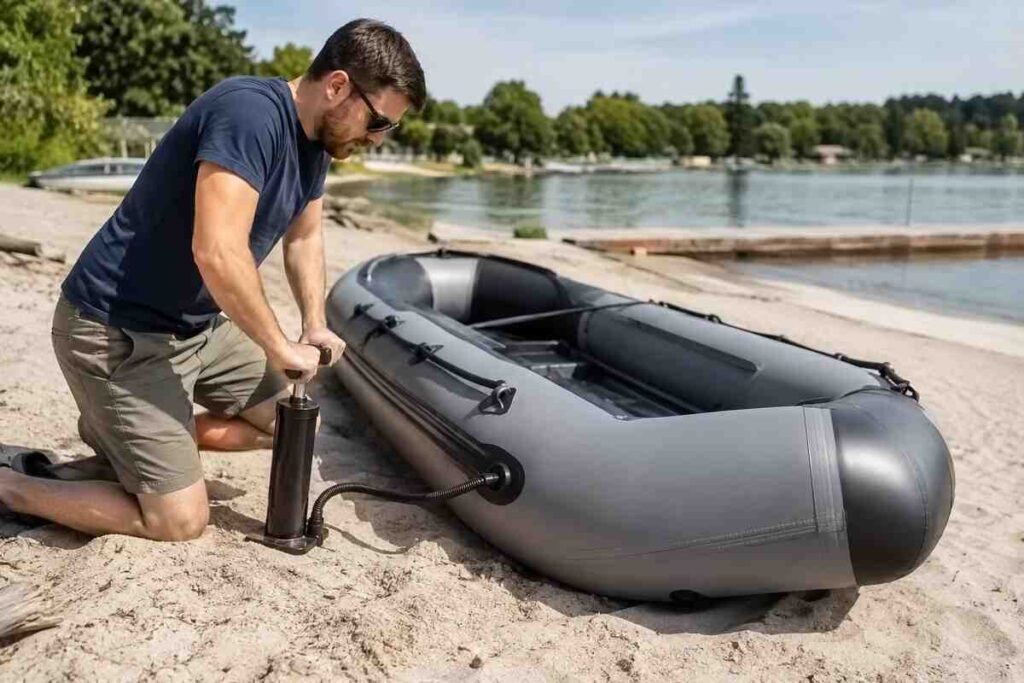
If you want to inflate Zodiac boat tubes correctly, the process comes down to using the right pressure, the right pump, and a bit of patience. Get it right and you have a stable, well-performing ride. Under-inflate it and handling suffers. Over-inflate it and you risk straining the seams and valves over time.
This guide covers everything you need to inflate Zodiac boat chambers properly: what to prepare beforehand, the exact steps to follow, the right pressure to aim for, and how to troubleshoot common problems. By the end, you’ll be able to inflate your boat confidently and correctly every time.
What You Need Before You Inflate a Zodiac Boat
A little preparation makes the whole process faster and easier.
Before you start, make sure you have:
- A suitable pump (manual, foot, or electric)
- A pressure gauge, if your pump doesn’t have one built in
- A flat, clean surface such as grass, a dock, or a clean driveway
- Your boat’s manual, since PSI recommendations can vary by model
It also helps to do a quick visual check first. Look over the fabric for wear, confirm the valves are intact, and make sure the boat is fully unfolded and laid out flat. This small step can save you from discovering a problem halfway through inflating.
Understanding Your Zodiac Boat’s Air Chambers
Zodiac boats aren’t inflated as a single unit. They’re made up of separate air chambers, typically including the main tubes (port and starboard), sometimes a bow chamber, and in some models, an inflatable keel or floor.
This matters for two reasons. First, each chamber needs similar pressure for the boat to sit evenly in the water. If one side is firmer than the other, you’ll notice it pulling slightly once you’re underway.
Second, multiple chambers are a safety feature. If one chamber is damaged or loses air, the others keep the boat afloat, which is part of why inflatable boats like these are trusted for recreational use and rescue operations alike.
Before you begin, locate each valve. Most Zodiac models use one-way Halkey-Roberts valves, which let air in easily and only release air when pressed or twisted, so there’s no risk of losing air while pumping.
Recommended PSI and Pressure Levels for Zodiac Boats
Getting the pressure right is one of the most common questions beginners have, and it’s worth taking seriously.
Most Zodiac inflatable boats run between 2.5 and 3.5 PSI in the main tubes, though this varies by model and size. Smaller tender-style boats often sit at the lower end, while larger rigid-hull inflatables (RIBs) may call for slightly higher pressure.
A few things to keep in mind:
- Check the placard near the valve for exact PSI, or refer to the official Zodiac owner’s manual for full specifications by model
- Temperature affects pressure. Air expands in heat and contracts in cold, so a boat inflated in the cool morning may read higher by afternoon
- If you’re unsure, slightly under-inflating is safer than overinflating, since overinflated fabric under direct sun is a real risk
A properly inflated tube should feel firm with very little give when pressed, similar to a well-inflated car tire rather than a soft pool float.
Step-by-Step Guide: How to Inflate Zodiac Boat Chambers
Here’s how to inflate a Zodiac boat from start to finish.
Step 1: Lay the Boat Out Flat
Unroll the boat completely on a clean, flat surface, making sure there are no folds or twists near the valves.
Step 2: Attach Your Pump
Connect the pump hose to the first valve, usually one of the main tubes. Make sure the connection is snug so you’re not losing air while pumping.
Step 3: Inflate Gradually
Pump steadily rather than aggressively. Manual and foot pumps take some effort, especially in the first minute or two.
Step 4: Move Between Chambers Evenly
Inflate all chambers to about 80% first, then go back and top each one off. This helps prevent uneven pressure while the fabric settles.
Step 5: Check Pressure With a Gauge
Once a chamber feels firm, confirm it’s within the recommended PSI range using a pressure gauge.
Step 6: Seal the Valves Properly
Close each valve cap securely once the chamber reaches the right pressure. A loose cap is one of the most common reasons boats slowly lose air overnight.
Manual vs Electric Pump: Which Works Best?
The right pump depends on how often you use your boat and how much time you want to spend inflating it.
Manual (hand) pumps
- Affordable and lightweight
- No power source needed
- Best for smaller boats or occasional use
- Takes more time and effort
Foot pumps
- A step up in convenience from hand pumps
- Still requires no battery or power source
- A good middle ground between effort and portability
Electric pumps (12V or battery-powered)
- The fastest option, often inflating a full boat in minutes
- Ideal for larger Zodiacs or frequent use
- Some models let you set an exact PSI and auto-stop once reached
- Bulkier to store and transport
If you inflate your boat only a few times a season, a manual or foot pump is usually enough. Frequent boaters or owners of larger Zodiacs will likely save time with an electric pump.
How to Know When Your Boat Is Fully Inflated
A few signs confirm your Zodiac is properly inflated and ready to launch:
- The tubes feel firm with minimal give when pressed
- Your pressure gauge reads within the manufacturer’s recommended PSI
- The boat holds its shape without sagging or wrinkling
- All chambers feel evenly firm compared to one another
A simple way to check: press your thumb into the tube. If it feels like a firm car tire and barely dents, you’re good to go. If it feels soft, it likely needs more air.
Common Mistakes to Avoid When Inflating Your Boat
A few habits are worth avoiding, even for experienced boaters:
- Fully inflating one chamber before moving to the next, which can cause uneven pressure
- Ignoring temperature changes, since a boat inflated in cool morning air can become overinflated by midday
- Skipping the pressure gauge and relying on feel alone
- Forgetting to check valve caps, which can slowly leak air overnight
- Using the wrong pump attachment, which can damage the valve
Avoiding these small mistakes extends the life of your boat and keeps every outing hassle-free.
Troubleshooting: What to Do If It Won’t Hold Air
If your Zodiac boat isn’t holding pressure, this is usually easy to fix.
Start with the basics: check that the valve cap is fully closed and that the pump hose was properly disconnected.
If the valve seems fine, look for a leak. Mix dish soap with water and apply it along seams and valves. Bubbles will show you exactly where air is escaping.
If you find a small puncture, most Zodiac repair kits include patches made for inflatable boat fabric. Clean and dry the area thoroughly before applying a patch, and let it cure fully before reinflating.
If the leak is at the valve itself, it can sometimes be replaced without repairing the whole chamber. If you’re unsure, a Zodiac-authorized dealer or repair service can help, especially while the boat is still under warranty.
Safety Tips Before You Head Out on the Water
Once your boat is inflated, a few quick checks help ensure a safe trip:
- Confirm all valve caps are sealed
- Recheck PSI if the boat has been sitting in direct sun
- Inspect the floor and keel, if inflatable, along with the main tubes
- Bring a basic repair kit just in case
- Check weather and water conditions before heading out
These habits take only a few minutes but make a real difference in how safely and confidently you enjoy your time on the water.
How to Properly Deflate and Store Your Zodiac Boat
Knowing how to inflate a Zodiac boat is only half the process. Deflating and storing it correctly keeps it in good condition for years.
- Open valves fully to let air out gradually rather than forcing it
- Fold along the boat’s natural seams to avoid stressing the fabric
- Clean and dry the boat completely before folding to prevent mildew
- Store in a cool, dry place away from direct sunlight
- Avoid placing anything heavy on top of the folded boat
Proper storage means less troubleshooting the next time you inflate it.
FAQs
How long does it take to inflate a Zodiac boat?
It typically takes 5 minutes with an electric pump or 20 to 30 minutes with a manual pump, depending on boat size.
What PSI should a Zodiac boat be inflated to?
Most models run between 2.5 and 3.5 PSI in the main tubes. Always check the specific rating for your boat.
Can I over-inflate my Zodiac boat?
Yes. Overinflating can strain seams and valves, especially if the boat sits in direct sunlight afterward. Stick to the manufacturer’s recommended PSI.
Do I need an electric pump to inflate a Zodiac boat?
No. A manual or foot pump works fine for smaller boats or occasional use. Electric pumps are simply faster and more convenient.
Why is my Zodiac boat losing air overnight?
This is usually caused by a loose valve cap, a small puncture, or normal pressure changes from cooler overnight temperatures. Check the valve seals first.
Conclusion
If you’re ready to inflate Zodiac boat tubes on your own, it comes down to a few basics: the right pump, correct PSI, and a bit of patience. Following the steps above, checking pressure carefully, and avoiding common mistakes will help your boat perform well and last for seasons to come.
Whether you’re preparing for your first outing or refining your routine, taking the time to inflate your Zodiac boat the right way pays off every time you’re on the water.