
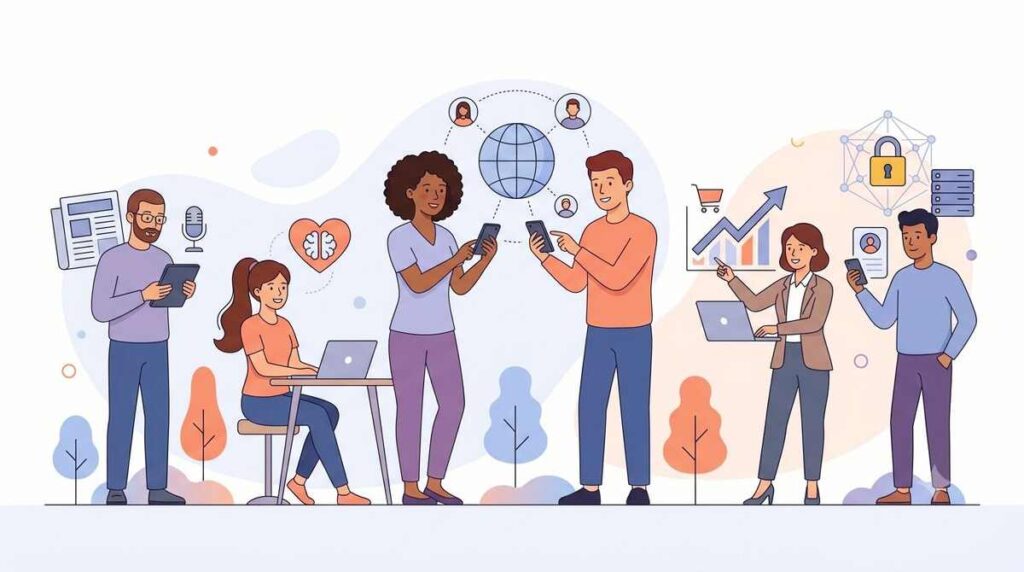
Most people check social media dozens of times a day without thinking much about it. Yet these platforms now influence how we communicate, get our news, run businesses, and think about privacy. If you want a clear, practical understanding of why social media matters, these are the 5 key points about social media worth knowing.
This article covers how social media connects people, shapes news consumption, affects mental health, supports business growth, and raises privacy concerns, along with practical tips for using it responsibly.
What Is Social Media and Why It Matters
Social media includes platforms like Facebook, Instagram, TikTok, X, and LinkedIn, where people create, share, and interact with content in real time. What began as a way to stay in touch with friends has grown into a system that shapes public opinion, influences elections, and drives global business decisions.
It’s no longer just an app for entertainment. It’s part of how information spreads, how brands grow, and how people build relationships. Understanding its role helps explain why the points below matter so much.
5 Key Points About Social Media You Should Know
Here are the five core ways social media shapes everyday life, from personal connection to business growth and privacy.
1. Social Media Connects People Across the World
Social media removes geographic barriers to communication. A student in Lahore can message a friend in London instantly, and a small business owner can reach international customers without spending on traditional advertising.
This connectivity has made it easier to:
- Maintain long-distance relationships
- Join communities built around shared interests rather than location
- Give a public voice to people who previously had limited access to media
Apps like WhatsApp and Facebook Messenger have largely replaced letters and long-distance calls, making global communication instant and normal.
2. It Shapes How We Consume News and Information
Many people now get their news primarily from social media feeds rather than TV or newspapers. This shift comes with tradeoffs.
On the positive side, news spreads faster, and citizen journalism allows real-time updates during major events. On the downside, misinformation can spread just as quickly, sometimes faster than verified reporting.
Since algorithms tend to prioritize engagement over accuracy, emotionally charged posts often get more visibility than balanced articles. This makes media literacy, the ability to verify what you read online, an increasingly important skill.
3. Social Media Influences Mental Health and Wellbeing
This is one of the most studied effects of social media. Research links heavy use to increased anxiety, lower self-esteem, and disrupted sleep, particularly among teenagers and young adults.
Common contributing factors include:
- Comparing your life to curated highlights from others
- Fear of missing out from constant scrolling
- Cyberbullying and online harassment
- Late-night screen use affecting sleep quality
Social media isn’t inherently harmful, though. Many people use it to find supportive communities and mental health resources. The impact largely depends on how and how much it’s used, not the platform itself.
4. It Plays a Major Role in Business and Marketing
For businesses of any size, social media offers one of the most affordable ways to reach customers. A well-made Instagram reel or TikTok video can drive more sales than a traditional ad campaign, often at a fraction of the cost.
Businesses commonly use social media to:
- Build brand awareness through consistent content
- Run targeted ads based on user interests and behavior
- Handle customer service through comments and direct messages
- Partner with influencers to reach specific audiences
This has leveled the playing field, giving local shops and freelancers the same marketing access once limited to large companies.
5. Privacy and Data Security Are Growing Concerns
Every like, comment, and search generates data, and platforms use this information to personalize content and sell targeted ads.
Key concerns include:
- Data breaches that expose personal information
- Third-party data sharing with advertisers, often without full transparency
- Location tracking and profiling that raise broader privacy questions
Because of this, users are encouraged to review privacy settings regularly and stay informed about how their data is used. Many governments are also introducing stricter data protection laws in response.
Benefits and Drawbacks of Daily Social Media Use
Putting these five points together, here’s how social media affects everyday life:
Benefits:
- Easy communication and networking
- Faster access to information
- Business growth opportunities
- Space for creativity and entertainment
- Communities built around shared interests
Drawbacks:
- Spread of misinformation
- Mental health strain from overuse
- Privacy and data security risks
- Less face-to-face interaction
- Potential for compulsive usage patterns
Social media isn’t inherently good or bad. The outcome depends on how it’s used.
Tips for Using Social Media Safely and Responsibly
A few simple habits can help you get the benefits without the downsides:
- Set time limits using screen time tools to avoid mindless scrolling.
- Verify before sharing news or claims you see online.
- Review privacy settings regularly to control what’s visible.
- Curate your feed by unfollowing accounts that affect your mood negatively.
- Take regular breaks from your accounts to reset focus and reduce screen fatigue.
FAQs
What are the 5 key points about social media?
Global connectivity, its role in shaping news consumption, its impact on mental health, its influence on business and marketing, and growing privacy concerns.
Is social media good or bad for mental health?
It depends on usage. Moderate, intentional use supports connection, while excessive or comparison-driven use is linked to anxiety and lower self-esteem.
How does social media help businesses?
It gives businesses affordable marketing, direct customer engagement, and targeted advertising, making it accessible to companies of all sizes.
Why is privacy a concern on social media?
Platforms collect large amounts of user data for advertising, which raises risks around data breaches and third-party sharing.
How can I use social media more responsibly?
Set time limits, verify information before sharing, review privacy settings, and unfollow content that negatively affects your mood.
Conclusion
Social media has reshaped how we connect, consume news, run businesses, and think about privacy. Understanding these 5 key points about social media helps you use these platforms more intentionally, getting the benefits while avoiding the common pitfalls.
You may also read: Is YouTube Social Media? Here’s What Experts Say